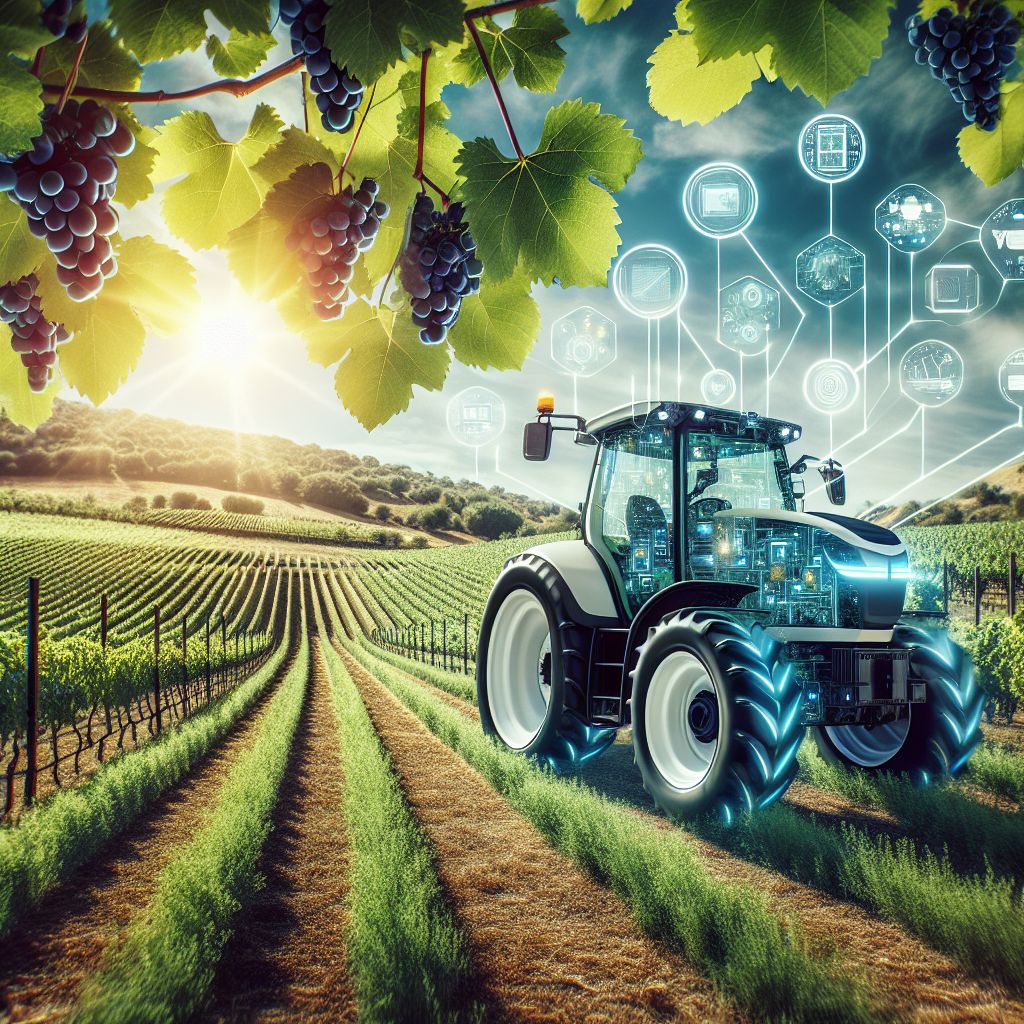
Farmers are now using smart machines, like autonomous tractors with AI sensors, to take care of vineyards. These machines help map the land, monitor crops, and make decisions that help create better wine. This is known as precision farming, where technology supports human work to make operations smoother and smarter.
The new technology is not meant to replace farmers but to help them work smarter by reducing fatigue and improving decisions. AI helps the tractors learn and plan their routes in vineyards, and it uses data from sensors to monitor crop health. This means that farmers can save time and work more safely, while also being kinder to the environment by using less fuel and reducing pollution.
Big companies like John Deere are also using this smart technology to help farmers apply chemicals only where they are needed. Other innovations include automated irrigation systems that learn water usage and can shut off when a leak is detected, making sure that water is used wisely. Even creative uses of AI, like designing wine labels with generative AI, are starting to appear in the industry.
While many farms are excited about these changes, smaller vineyards may face challenges because of high costs and the need for special training. Regardless, the growing use of AI in farming shows a historic shift towards more sustainable and efficient agriculture that could change the face of wine production forever.